

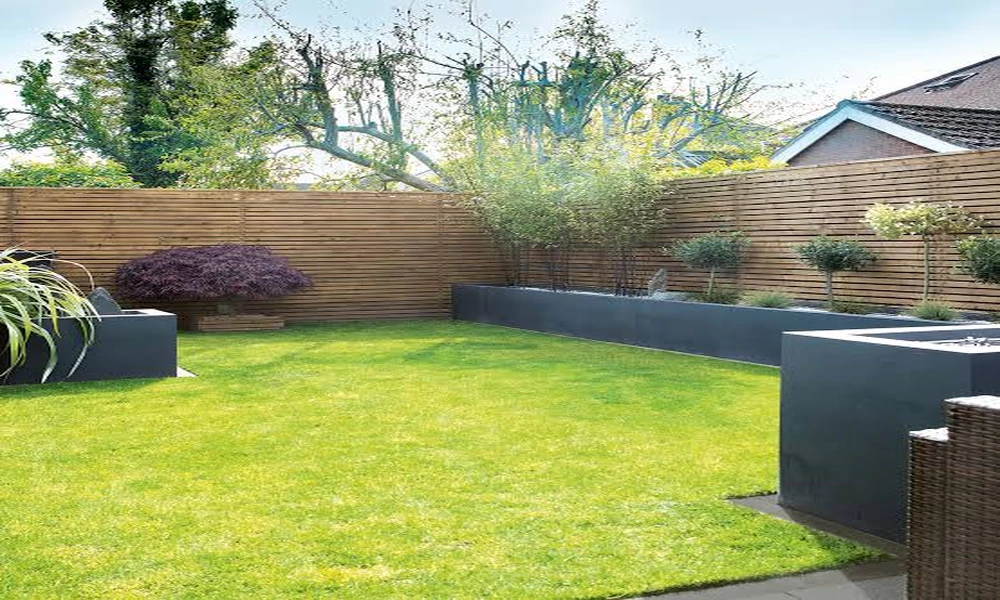
After a few decades working with fences, you stop judging materials by how good they look on the day they are fitted. I am much more interested in what they look like after five Yorkshire winters.
That changes the conversation quite a bit.
Timber can last far longer than people expect. Concrete can crack. Composite fencing can move. Expensive materials can fail early if they are badly installed, while fairly ordinary timber can keep going for years if the groundwork is right.
Anyone considering new garden fencing in York this autumn should therefore look beyond the panel itself. The material matters, but so do the posts, ground conditions, exposure, drainage and quality of the fence installation.
Winter has a habit of finding whichever part somebody tried to save money on.
Yorkshire weather is harder on fencing than it looks
People tend to think of storm damage as the main winter problem. Strong wind certainly causes plenty of work for fencing contractors, but it is only part of the story.
Water causes just as much trouble.
A wet October can leave ground saturated before winter has properly begun. Then temperatures drop. Timber stays damp. Clay holds water around post bases. Wind starts working against posts that are sitting in increasingly soft ground.
You then get repeated cycles of wet, cold, wind and occasional frost.
That is hard on any boundary.
In and around York, ground conditions can change remarkably quickly between jobs. Heavy clay is common. Some gardens drain reasonably well while the one next door seems to hold water for days.
Older properties bring another problem.
Dig down and you can find bricks, concrete, old post foundations, tree roots and rubble from work carried out decades ago. I have started digging what looked like a straightforward post hole and found enough old concrete underneath to keep you busy for the next hour.
Newer gardens are not necessarily easier. Some have thin layers of topsoil over heavily compacted ground.
This is why I am always wary of anybody declaring one fencing material “the best” without seeing the garden.
There isn’t one.
Timber fencing still earns its place
Timber sometimes gets dismissed as the old-fashioned option now that composite systems have become more common.
I think that is unfair.
Good timber fencing, properly installed and maintained, remains one of the most practical choices for British gardens.
It looks natural. Individual parts can be replaced. There are plenty of styles available. Repairs are usually straightforward.
The problem is that there is an enormous difference between good timber and cheap timber.
That difference becomes obvious after several winters.
Pressure-treated timber is generally my preference for posts, rails and boards that are expected to remain outside for years. The preservative penetrates further into the wood than a basic surface treatment.
Even pressure-treated timber is not maintenance-free.
Wood absorbs moisture and releases it again. It expands. It contracts. Small cracks appear. Boards can cup slightly. Posts can twist.
That is normal.
The question is whether those natural movements affect the structure.
Most timber problems begin near ground level
If I inspect an older timber fence, one of the first places I look is around the bottom of the posts.
That little area where timber meets soil and air takes a beating.
Posts can look perfectly healthy 300mm above the ground while being almost hollow at soil level. Sometimes you push the fence and everything moves even though the visible timber looks fine.
This is where gravel boards help.
They keep the main fencing panels away from damp soil and standing water. I have replaced plenty of gravel boards while leaving the fencing above untouched because they did exactly what they were supposed to do.
The sacrificial part took the damage.
Problems arise when soil, bark or raised beds are piled against timber.
I see this all the time.
Someone installs a nice fence. Later, the garden gets landscaped and soil is pushed against the bottom. Then plants grow thickly against it and airflow disappears.
The timber stays damp.
Rot follows.
No treatment can compensate indefinitely for timber being kept wet.
Timber also gives you repair options
This is one of timber’s strongest advantages.
If a single feather edge board breaks, replace it.
If one rail fails, replace the rail.
If a panel is damaged, swap the panel.
Even individual posts can often be replaced without rebuilding the whole boundary.
That matters because fences rarely age perfectly evenly.
One section might face strong wind. Another might sit beneath trees. Another might be sheltered by a garage.
I have worked on fences where one section was finished while another had years left in it.
Targeted fence repairs in York can make far more sense than ripping everything out because one area has deteriorated.
A decent fencing contractor should be prepared to say that.
Where timber struggles
Constant moisture is the obvious weakness.
Poor maintenance is another.
Cheap panels also tend to show their age faster. Thin rails can twist or split. Lightweight boards become brittle. Weak fixings work loose.
Then there is wind.
A solid six-foot timber fence presents a substantial surface to a strong gust. If the posts are shallow or the concrete footings are weak, it does not matter how good the panels are.
The entire structure can move.
I have attended plenty of winter jobs where the panels were blamed but were actually still perfectly usable. The posts had failed underneath them.
That distinction matters.
Replacing good panels without fixing weak foundations solves nothing.
Concrete posts solve one problem very well
Concrete fence posts are not glamorous.
Some homeowners dislike the appearance. I understand that.
But they have one enormous advantage.
They do not rot.
That makes them particularly useful in wet gardens or places where previous timber posts have repeatedly failed at ground level.
A common domestic arrangement is concrete posts, concrete gravel boards and timber panels.
It works well.
The structural parts touching the ground resist moisture while the timber panels provide the appearance people prefer.
Panels can also be slid out and replaced relatively easily.
From a maintenance point of view, that is a sensible system.
Concrete is not indestructible
I occasionally hear concrete described as if it lasts forever.
It doesn’t.
Old concrete posts can crack. Reinforcement inside them can corrode. Frost and moisture can worsen existing damage.
They are also heavy.
Very heavy.
That affects installation and repairs.
If a concrete post starts leaning, simply pushing it straight is rarely the answer. The footing or surrounding ground needs investigation.
Poorly installed concrete posts can move just like timber ones.
The post itself might be sound, but the foundation holding it is not.
Again, installation beats material.
Concrete gravel boards deserve more attention
For damp gardens, I often like concrete gravel boards even where the homeowner prefers timber panels.
They create a proper barrier between the panel and the soil.
This becomes particularly useful where neighbouring ground levels differ slightly or where flower beds sit close to the boundary.
They also deal well with strimmers and general garden knocks.
Timber gravel boards are cheaper and easier to handle, but eventually they will deteriorate.
Concrete generally lasts longer.
There is a visual trade-off, though. Some people simply prefer an all-timber fence.
There is nothing wrong with that.
The right answer depends on priorities.
Composite fencing has changed a lot
Composite fencing has become far more visible in British gardens.
Part of that comes from changing expectations around maintenance.
People are busy. Plenty of homeowners do not want to spend a Saturday every couple of years staining fifty feet of fencing.
Composite addresses that problem well.
It does not rot in the same way timber does. It does not need regular painting or staining. Colour tends to remain more consistent, though some weathering is normal.
For modern gardens, it can look very smart.
There are now more finishes too. Earlier composite systems could look slightly plastic. Better products have improved considerably.
But I would still never tell someone composite is automatically better.
Composite fencing cost needs looking at properly
People searching for fencing composite fencing cost sometimes compare only the panel prices.
That gives a misleading picture.
You need to consider the complete installation:
Posts
Panels
Gravel boards or base sections
Fixings
Groundwork
Removal of the existing fence
Waste disposal
Labour
Gates
Changes in ground level
Access
Composite often costs more initially than straightforward timber fencing.
The argument in its favour is lower maintenance over time.
Whether that calculation works depends on how long you expect to remain at the property and how much value you place on avoiding maintenance.
For someone who enjoys treating timber and wants a traditional garden, composite may offer little advantage.
For somebody who wants to install the fence and largely forget about painting it, the calculation changes.
Composite still moves
This catches some people out.
Composite products expand and contract as temperatures change.
Installation instructions normally account for this with appropriate gaps and fixing methods.
Ignore those requirements and panels can bow, buckle or become too tight within their frames.
I have seen installations where somebody has treated composite exactly like timber.
It isn’t.
This is why experienced fencing contractors near me should understand the system they are fitting rather than simply applying the same method to every material.
Modern fencing products can be excellent, but they need installing correctly.
What survives wind best?
This is where material becomes less important than design.
People assume stronger material automatically means better wind resistance.
Not necessarily.
A completely solid fence catches wind.
It does not matter whether the surface is timber or composite. The wind still has to go somewhere.
In exposed gardens, fencing that allows some airflow can sometimes survive better than a solid privacy barrier.
Hit and miss fencing is a good example. Slatted systems can work similarly depending on the spacing.
Closeboard fencing can also be extremely strong when properly built because the structure is assembled as a continuous run rather than relying on lightweight panels.
But the foundations still matter.
Always.
I would rather have sensible panels on correctly installed posts than supposedly premium panels sitting on shallow footings.
Fence posts decide more than panel material
If there is one point I would make to anyone comparing fencing companies near me, it is this:
Ask about the posts.
Everyone wants to discuss panels because panels are visible.
Ask instead:
What size posts are being used?
How deep will they go?
What happens in soft ground?
How are corners handled?
What about gate posts?
How much concrete is used?
Those answers tell you far more about the expected lifespan of the fence than the colour of the panel.
For a typical six-foot domestic fence, around 600mm of post depth is a common starting point. Conditions can require more.
An exposed boundary is different from a sheltered courtyard.
Heavy gates need more support than panels.
Soft ground needs thought.
There is no sensible universal specification for every garden.
York’s clay changes the calculation
Heavy clay is awkward because its behaviour changes with moisture.
After prolonged rain it can become soft and sticky. During dry spells it firms up and can shrink.
That seasonal movement places stress on fence foundations.
If you have ever noticed a gate working perfectly during one part of the year and catching slightly during another, ground and timber movement may both be involved.
It does not necessarily mean the fence was badly built.
Small movement happens.
Large movement should not.
Posts rocking visibly in their footings are a warning sign.
So are gravel boards suddenly sitting at different heights.
Do not wait until the fence falls.
Gates need their own material decision
Garden gates put much greater loads on posts than fixed fencing.
A heavy timber gate can pull against its hinges thousands of times over its life.
Add wind and the force increases considerably.
That is why I dislike gate posts being treated like ordinary intermediate fence posts.
They need enough strength for the job.
Composite gates can reduce some maintenance issues, but weight varies between systems. Timber gates may need occasional adjustment as the material changes with moisture.
Driveway gates increase the forces again because of their width.
Whatever material you choose, the support underneath matters more than the marketing description attached to it.
Which material needs the least maintenance?
Composite generally wins this one.
Wash it occasionally. Keep vegetation under control. Check fixings and posts. That is about it for many systems.
Concrete needs little routine maintenance either, although cracks should be monitored.
Timber asks for more attention.
How much depends on treatment, exposure and the finish you want.
Pressure-treated timber can often be left to weather naturally, though its appearance will change. Stains and preservatives can help maintain appearance and add protection.
The biggest maintenance job costs nothing.
Walk the fence line.
Do it in spring and again in autumn.
Push posts gently.
Look at the bottom of panels.
Check gate alignment.
Move vegetation away.
Look for loose rails.
Ten minutes can reveal a problem before winter turns it into a much bigger one.
What about appearance?
This is personal.
For traditional York properties, timber often looks right. Feather edge fencing in particular works well around older homes because it does not fight with the character of the property.
Composite tends to suit contemporary gardens and modern extensions, although wood-effect finishes have blurred that line.
Concrete is mainly structural. Some people do not mind seeing concrete posts. Others strongly dislike them.
There is no technical argument that overrides what somebody wants to look at every day.
A fence is part of the garden.
It should suit it.
Which one would I put in my own garden?
That depends entirely on the garden.
If I had a sheltered traditional garden with decent drainage, I would be perfectly happy with quality pressure-treated timber.
If the ground stayed wet and previous posts had rotted repeatedly, concrete posts would be high on my list.
If I wanted very little maintenance and had the budget, I would consider a good composite system.
If the garden was extremely exposed, I would think about the design before any of those materials. I might sacrifice a little privacy for better airflow rather than building a six-foot solid wall for the wind to attack.
That is the bit often missing from conversations about fence installation near me.
People want a winner.
Timber versus composite.
Concrete versus timber.
There isn’t one.
Spend money underneath the fence first
If budgets are tight, this is where I would prioritise them.
Get the foundations right.
Use appropriate posts.
Use enough concrete.
Deal with drainage.
Choose sensible fixings.
Protect the bottom of the fence.
Then decide how much is left for decorative panels.
I have seen expensive fencing installed badly and cheap fencing installed brilliantly.
Guess which one I would rather own five years later.
A Yorkshire winter does not care what the brochure said. It finds weak posts, poor drainage, bad fixings and rushed groundwork.
Choose the material that suits the property, but make sure somebody installs it properly.
That is usually what decides which fence is still standing when spring comes back around.