

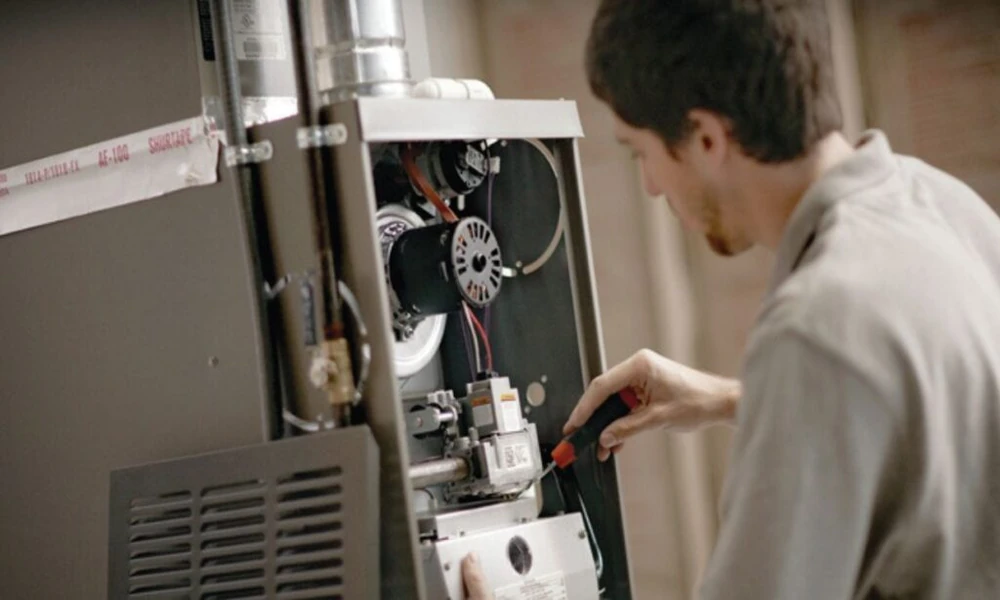
When a heating or cooling system is replaced, many homeowners assume that more power means more comfort. It sounds logical: a larger unit should heat faster, cool faster, and handle extreme weather with ease. In practice, the opposite is often true. An oversized system turns on, hits the target temperature quickly, and shuts off again, over and over, without ever settling into a steady rhythm. The result can be uneven temperatures, higher bills, extra wear, and a house that never feels quite right. Understanding how sizing works can save you from an expensive mistake, and a qualified team like Tec-HVAC, LLC can help match equipment to your home instead of guessing based on the old unit or a rule of thumb.
Rather than focusing on seasons, climate, or maintenance, this article explains the logic behind sizing and what to ask before you buy.
What “Size” Actually Means
In heating and cooling, size refers to capacity, not physical dimensions. Furnaces are rated in BTUs per hour, while air conditioners and heat pumps are often described in tons. One ton of cooling equals 12,000 BTUs per hour. The goal is to choose a capacity that matches how much heat your home gains in summer and loses in winter, no more and no less.
The Problem With Oversizing
An oversized system may seem impressive, but it creates several problems:
- Short cycling. The unit reaches the thermostat setting too quickly and shuts off, then restarts again soon after. Frequent starts put stress on compressors, igniters, and motors.
- Poor humidity control. An air conditioner removes moisture while it runs. If it shuts off too soon, the air feels cool but clammy.
- Temperature swings. Rooms far from the thermostat may not get enough time to reach a comfortable level.
- Noise. Large systems can push air harder, which may lead to louder vents and ductwork.
- Higher cost. Bigger equipment usually costs more upfront and may use more energy over time.
The Problem With Undersizing
Going too small has its own downsides. An undersized system runs constantly during extreme weather and still may not keep up. That can mean long run times, higher wear, and rooms that never reach the set temperature. Neither extreme is ideal, which is why accuracy matters.
What a Proper Sizing Calculation Considers
A reliable contractor does not pick equipment based on square footage alone. A thorough load calculation looks at:
- The size and layout of the home
- Insulation levels in walls, attic, and floors
- Window size, type, and orientation
- Air leakage and the overall tightness of the house
- Ceiling heights and number of floors
- Local climate and design temperatures
- The number of occupants and heat-producing appliances
The industry standard method for this is known as a Manual J load calculation. The U.S. Department of Energy discusses how correctly sized equipment affects efficiency and comfort in its guide to heating and cooling, which is a helpful starting point if you want to understand the basics.
Why “Same Size as the Old One” Is Risky
Many replacements simply copy the capacity of the existing unit. But homes change. New windows, added insulation, air sealing, or finished basements can reduce the load considerably. The old unit may also have been wrong from the start. Treat a replacement as a chance to recalculate rather than repeat.
Sizing and Ductwork Go Together
Even the perfect unit can underperform if the ducts cannot carry the airflow it produces. Undersized or leaky ductwork can cause noise, weak airflow, and uneven rooms, no matter how good the equipment is. A thoughtful evaluation checks both the equipment and the distribution system.
Features That Help Right-Sized Systems Perform
| Feature | What It Does |
|---|---|
| Variable-speed blower | Adjusts airflow for steadier comfort |
| Two-stage or modulating equipment | Runs at lower output most of the time |
| Programmable or smart thermostat | Improves scheduling and control |
| Zoning | Directs air to specific areas of the home |
| Proper filtration | Protects airflow and equipment |
These features add flexibility, but they do not replace correct sizing.
Signs Your Current System May Be the Wrong Size
- It turns on and off frequently in short bursts
- Some rooms are always too hot or too cold
- The house feels humid even when the air conditioner is running
- The system runs nonstop on moderate days
- Energy bills seem high for the size of your home
These symptoms can have other causes too, so a professional evaluation is the best way to know for sure.
Questions to Ask Before You Replace Equipment
- Will you perform a full load calculation, or rely on the old unit’s size?
- What assumptions went into the calculation?
- Should ductwork be inspected or modified?
- What efficiency ratings and features are you recommending, and why?
- How will the new system handle both peak weather and mild days?
A contractor who answers clearly and shows the numbers behind the recommendation is usually one worth trusting.
Final Thoughts
The best heating and cooling system is not the biggest or the cheapest. It is the one matched to your home’s real needs. Take time to ask about load calculations, consider the ductwork, and think about how the house has changed since the last installation. A properly sized system runs smoothly, keeps rooms comfortable, and tends to last longer, which makes the careful planning well worth the effort.