

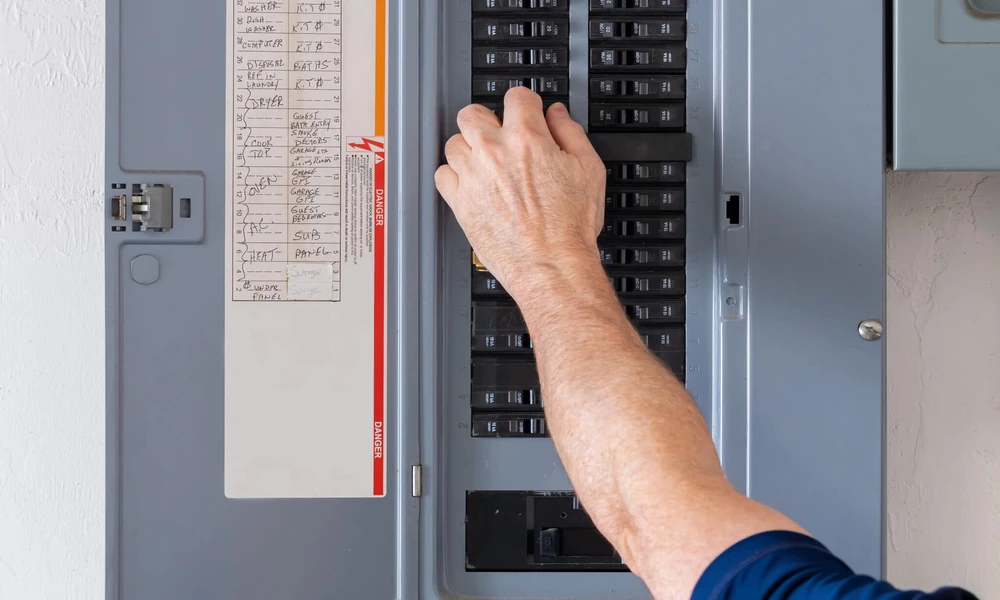
Most homeowners never think about the gray metal box in the garage until a letter from their insurance company mentions it. Those letters have become far more common across California, where carriers are looking hard at every risk they cover. Older electrical panels sit near the top of that list. A renewal that once went through automatically can now come with a request for panel photos, an inspection report, or proof of replacement.
The reasoning is not mysterious. Insurers track claims, and certain panel brands built decades ago keep showing up in fire investigations and home inspection reports. When a house still has one of those panels, the carrier sees a known hazard sitting inside the wall. In a tight insurance market, it has little reason to accept that risk.
East Bay electricians have been fielding these calls for several years now. S&B Electric, a family owned contractor based in Concord since 2006, lists insurance required panel replacements among its main services alongside free second opinions. That tells you how often the issue comes up in neighborhoods filled with postwar housing, where original equipment is still common.
The Panels That Raise Red Flags
Not every old panel is a problem. A handful of specific designs, though, show up again and again on insurer lists.
Federal Pacific Electric Stab-Lok
These panels went into millions of homes from the 1950s through the 1980s. Independent testing over the years found that a worrying share of their breakers could fail to trip during an overload or short circuit, which is the one job a breaker exists to do. A federal safety review in the early 1980s ended without a recall. That left homeowners with an unsettled question, while many insurers settled it for themselves.
Zinsco and Sylvania Zinsco
Zinsco breakers clip onto aluminum bus bars. Over time that connection can loosen and start arcing, which creates heat. In bad cases the breaker fuses to the bus and stays on no matter what happens on the circuit. Scorch marks or discoloration around the breakers are a strong warning sign.
Pushmatic and Split Bus Designs
Pushmatic panels use push buttons instead of toggle switches. The mechanisms tend to stiffen with age, and many of these panels have no single main breaker. Older split bus panels follow the “rule of six,” where shutting off the whole house can take up to six separate handles. Neither design is automatically dangerous, but both are dated, hard to service, and short on space for new circuits.
Fuse Boxes
Screw-in fuses still work when they are sized correctly. The trouble is human. Over the decades, someone tired of blown fuses may have installed a larger one, letting a thin wire carry more current than it can safely handle.
How to Tell What You Have
You can often identify your panel without removing anything. Open the panel door only, never the inner cover that hides the wiring, and look for these clues:
- A manufacturer label on the inside of the door, sometimes faded but usually readable
- The words “Stab-Lok” printed on the breakers themselves
- Rows of thin, multicolored breaker handles, which are typical of Zinsco
- Push buttons in place of switches, the giveaway for Pushmatic
- Round glass fuses screwed into sockets
- A cover that feels warm, a buzzing sound, or a burnt smell nearby
That last group matters more than any brand name. A panel showing heat or noise needs attention whether or not an insurer has asked about it. Snap a clear photo of the label too, because carriers often want exactly that.
Why Age Matters Beyond the Brand
Even a well regarded panel from 1965 was built for a very different household. Back then a house might have run a refrigerator, a range, a few lamps, and a television. Today the same home may be charging an electric vehicle, running a heat pump, cooking on an induction range, and powering dozens of devices around the clock.
The Electrical Safety Foundation International notes that the typical American home is now more than 37 years old, and that many were wired with components no longer considered safe. Growing demand on those aging systems can lead to overheating and fires. A 100 amp service that felt generous decades ago can be stretched thin by modern electrification, especially in California, where state policy keeps nudging homes away from gas appliances.
What Replacement Actually Involves
A panel swap is a bigger job than it looks from the outside. In most California cities and counties it requires a building permit, so the work gets inspected before the walls and cover go back on. The electrician also coordinates with the utility, since power has to be cut at the meter. For most homes that means a full day without electricity, with the lights back on by evening.
The replacement itself often uncovers other upgrades. Grounding and bonding may need updating to meet current code. Some circuits may need arc fault or ground fault protection. If the meter base is old or damaged, it may be replaced at the same time. Stucco or drywall around the panel sometimes needs patching afterward.
This is also the moment to think ahead. Moving to 200 amp service makes sense for many households planning solar, battery storage, or an EV charger. For homes where a service upgrade would be costly, load management devices and smart panels have become a practical middle path. They let a 100 or 125 amp service handle more by controlling when large loads run.
Getting Ahead of the Insurance Letter
Waiting for a nonrenewal notice puts you on someone else’s schedule. If your home was built before the 1990s and still has original equipment, it is worth finding out what is in that box now, while you can compare quotes and plan the work calmly.
Once the job is done, keep the paperwork together. The final permit sign-off, the invoice, and a photo of the new panel are usually all an insurer needs. Many carriers will accept that documentation at renewal, and some homeowners find it opens the door to standard market coverage again after being pushed toward more expensive options.
The panel rarely gets attention because it does its job silently. When it is the right equipment in good condition, that silence is exactly what you want. When it is not, a single day of planned work can protect both the house and the policy that covers it.