

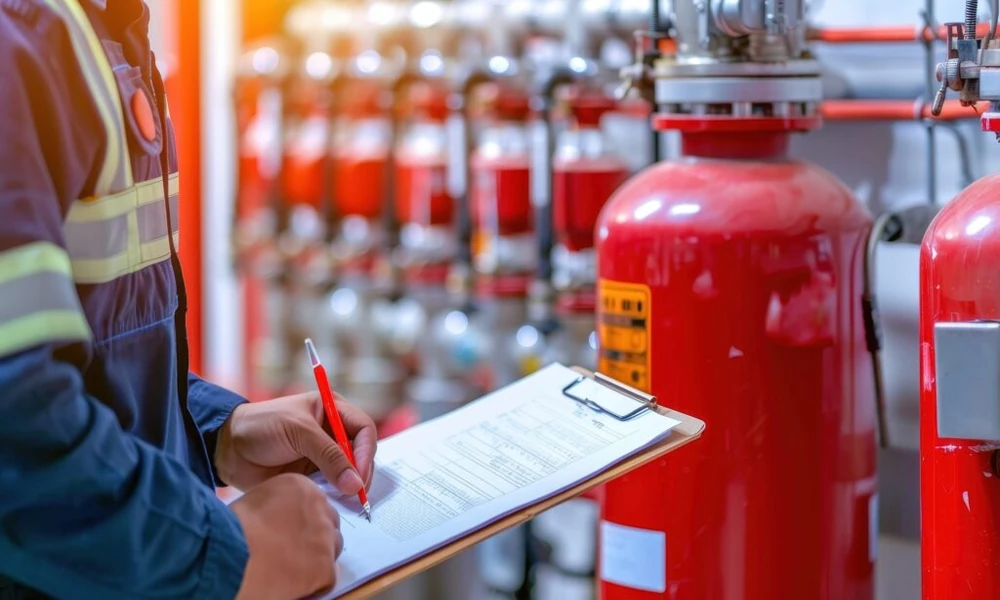
A fire watch guard may complete hundreds of uneventful rounds, but every one of them is preparation for the rare moment when something is truly wrong. What happens in the first minutes after smoke or flames are detected can shape the outcome of the entire incident. Guards are trained to follow a clear sequence of actions rather than improvise. This article describes that sequence and the reasoning behind it.
Because high-stress emergencies leave no room for hesitation, deploying trained Fire Watch Guards ensures a composed, methodical response the instant a hazard appears. Experienced personnel know how to execute emergency protocols without panicking-simultaneously alerting occupants, guiding safe evacuations, and delivering vital site details to arriving firefighters before a small flare-up can escalate.
Raising the Alarm
The first priority is to alert people and summon help. The guard activates the nearest manual pull station if the alarm system is working, uses the building’s alternative warning method if it is not, and calls the emergency number. The call should state the address, the exact location of the problem, and what the guard sees. Delaying the call to investigate or to fight the fire is a serious mistake, because fires grow faster than most people expect.
Helping People Leave
Next, the guard helps occupants move to safety. Stairwells, not elevators, should be used. Doors should be closed behind people to slow the spread of smoke and flames. The guard watches for those who may need assistance, such as people with disabilities or visitors unfamiliar with the building, and directs everyone to the designated meeting point. Once outside, a head count against any available list helps responders know whether anyone may still be inside.
Using an Extinguisher Carefully
Only if a fire is small, the guard is trained, the right extinguisher is available, and there is a clear escape route behind them should an attempt be made to put it out. A common technique is to aim at the base of the flames and sweep from side to side. If the fire does not shrink quickly, or if smoke begins to build, the guard stops and leaves. Personal safety always comes before property.
Meeting Responders and Following Up
When firefighters arrive, the guard meets them and reports what was seen, where it was, and whether anyone may remain inside. They should also share the status of any impaired systems and the location of hazardous materials. After the incident, the guard records the time of detection, the actions taken, and the people contacted, and continues the watch if the fire official directs it.
Learning From the Event
Following any incident, however small, the organisation should review what happened. Guards, managers, and responders can discuss how quickly the problem was found, whether communication worked, and whether equipment was where it should be. Findings may lead to changes in patrol routes, training, or alarm procedures. Treating every event as a chance to improve helps keep future responses sharper and calmer.
Conclusion
When a fire watch detects smoke or flames, speed and order matter most: sound the alarm, call for help, move people out, and hand control to professionals. A guard who has rehearsed these steps and keeps accurate records gives everyone in the building the best possible chance of escaping harm.