

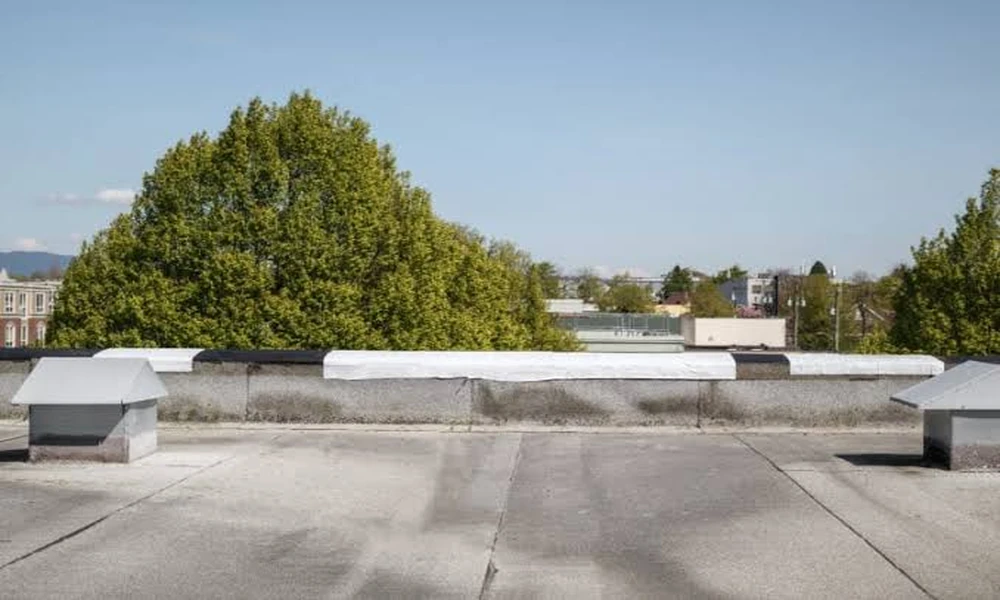
Typical flat roofs are a common solution for businesses such as offices, warehouses, retail spaces, and similar buildings. Unfortunately, low-slope roofs can make certain issues, like membrane tearing, punctures, and standing water, less visible than on other roofing structures.
In cases where property owners want to explore possible roofing services, https://rgbconstructionservices.com/cherry-hill/residential-roofing/ can be a go-to choice for roof evaluation, repair, and replacement services depending on the materials, age, condition, and extent of damage of the roof.
Identifying Membrane Splits
Several factors can cause splits in the membrane. As materials age, exposure to temperature variations and movement within the roof structure can cause the formation of stress on the membrane. The seams and transitions become more prone to stress since movement and tension are possible here.
Even the smallest splits can enable water penetration to the membrane’s lower layers without being able to see leaks inside the structure. It is vital to inspect a roof in advance since smaller damage to the membrane can lead to even more severe issues related to moisture.
The inspection should include checking the present seams, cracks, flashings, and areas surrounding the rooftop equipment for any damage. The choice of repair depends on the type of membrane and extent of the damage.
Repairing Punctures and Tears
Punctures may also cause damage to membranes. These may happen when workers travel around on the roof and when equipment is moved around the roof surface. Even though a puncture looks very small, the small opening can let water into the roof and cause more severe damage in the future.
The repair process involves several steps that must be taken. Before the patching procedure, the affected area must be cleaned and prepared correctly. When the patching is done, the membrane adjacent to the repair site must be checked for any additional punctures and other damage.
Addressing Ponding Water
Low-slope commercial roofs often suffer from the problem of standing water. Water that is left over after a rainstorm can force a membrane to endure stress over longer periods and lead up to the identification of weak seams and damaged places.
Ponding may arise due to blocked drains, poor drainage design, settled insulation, structural movement, insufficient slope, or debris around the drainage points. Simply removing standing water will not help. It is necessary to check the drainage system and the roof surface for possible accumulation.
Checking Seams, Flashing, and Penetrations
Membrane damage on flat roofs is not always limited to the center area of the membrane. Fragile areas include the seam areas, edges, flashing, vents, and HVAC system penetration sites. In such locations, the possibility of membrane damage is higher due to the movement in the membrane.
In the process of inspection, one should check the presence of loose or faulty flashing, broken seals, separated seams, vulnerable penetrations, and loose membrane edges. Detecting leaks is important since water can seep underneath the membrane to the other point of the roof surface.
When Repair May Not Be Enough
A localized fixing can be an option when the damage is limited in scope, and the roof system overall is in decent condition. One should consider doing a replacement when deterioration is extensive, or repairs tend to fail again and again.
Having multiple leaks that appear more than once, membranes that show many signs of extensive deterioration, punctures all over, wet insulation, seam failures, and significant roof deck deterioration are ways of showing that the problem might take a turn for the worse.
To make a decision about repairing or replacing a roof, one additionally considers the age of a roof and its peculiarities by evaluating the membrane, its assembly, and repair history.
Preventing Future Flat Roof Problems
Inspections are a way to prevent minor problems from becoming complicated and expensive. Property management should focus on both the membrane and drainage system.
The drains and scuppers must be free of debris, the accumulated dirt should be removed, and the seams should be checked regularly. Areas around the roofing equipment should also be inspected because of the high possibility of membrane damage due to maintenance actions.
Conclusion
When dealing with commercial flat roof repairs, you need to keep in mind that simply covering a leak is not enough. You will also need to deal with splits in the membrane, punctures, seams that could be defective, and pooling. All these problems arise due to different factors and require a different approach to repairs. However, with a proper inspection, you will be able to determine if you need a targeted repair or more extensive work on your flat roof. For any types of roofing information and services, you should visit rgbconstructionservices.com/cherry-hill/residential-roofing/.