

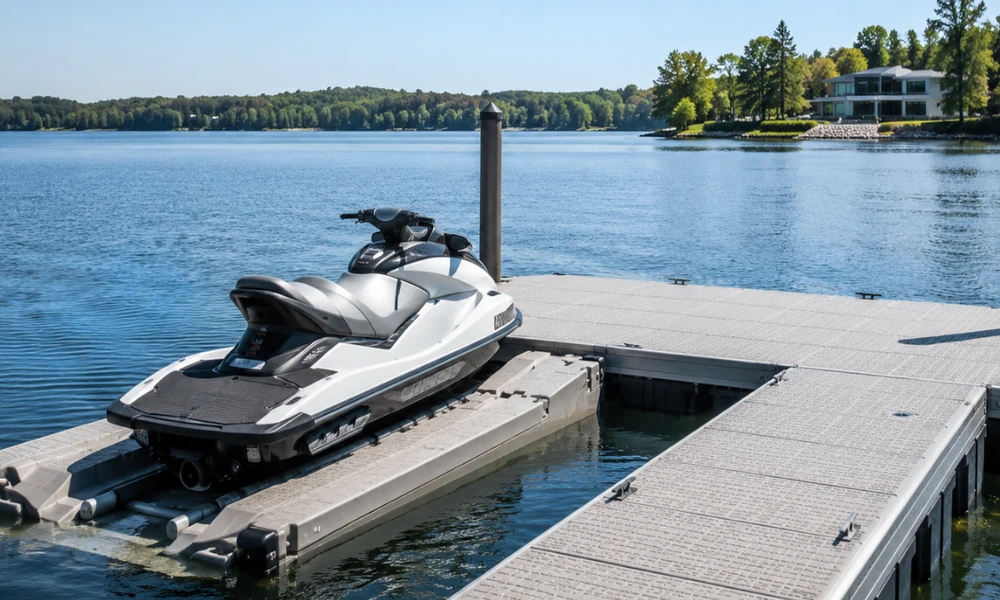
Adding a jet ski port to a floating dock creates a convenient place to store, launch, and access a personal watercraft. When properly integrated, the port keeps the hull above the water, reduces marine growth, and eliminates the need for frequent trailer use. Successful installation, however, requires more than simply attaching a platform to the dock.
Evaluate the Existing Dock
Begin by examining the floating dock’s condition, dimensions, and load capacity. The structure must support the additional forces created by the port and watercraft without becoming unstable. Inspect flotation units, decking, framing, anchors, and connectors for wear or damage.
The dock should also provide enough walking space around the port. Users need a safe route for boarding, securing equipment, and carrying supplies. Installing a port in a narrow passage can create congestion and increase the risk of falls.
Choose a Compatible Port
Jet ski ports are available in various sizes, buoyancy ratings, and configurations. Select a model designed to accommodate the watercraft’s total weight, hull shape, width, and length. Remember to include fuel, accessories, and stored equipment when calculating the load.
Compatibility with the floating dock is equally important. The port and dock should have similar freeboard heights so users can move between them safely. A large height difference may also place unnecessary stress on the connection points.
Rollers or adjustable supports should guide the watercraft into position without damaging its hull. The port must allow the craft to remain balanced and secure while still making launching manageable.
Select the Best Location
Position the jet ski port where it will not interfere with boats, ladders, swimming areas, or normal dock traffic. An outside edge or dedicated slip often provides a clear approach from the water.
Consider prevailing winds, currents, waves, and changing water levels. The water must be deep enough for the watercraft during launching and retrieval. Avoid locations near rocks, vegetation, underwater structures, or other hazards.
Whenever possible, orient the port so the rider has a straight approach. Requiring a sharp turn immediately before driving onto the platform can make docking more difficult.
Use the Correct Connection System
A floating port must move with the dock while remaining firmly attached. Use marine-grade brackets, hinges, couplers, or mounting hardware intended for the specific dock and environmental conditions. Improvised connectors may corrode, loosen, or place concentrated stress on the dock.
Space connection points evenly to distribute the load. Hardware should permit normal vertical movement caused by waves and changing water levels without allowing excessive sideways motion. Tighten all fasteners according to the hardware specifications, but avoid overtightening components that require flexibility.
The anchoring system may also need adjustment. Adding a port increases the dock’s surface area and changes how it responds to wind, current, and wake. Confirm that pilings, cables, chains, or other anchors can control the expanded structure.
Test the Completed Installation
Before regular use, inspect the port from multiple angles. Confirm that it sits level, maintains adequate flotation, and does not twist the dock. Test the connection by applying gradual pressure and observing how the components move together.
Load and unload the watercraft slowly during the first trial. Check its alignment, stability, stopping position, and clearance from surrounding structures. Make adjustments if the bow sits too high, the hull rests unevenly, or launching requires excessive force.
Plan for Routine Maintenance
Inspect connectors, rollers, flotation chambers, anchors, and walking surfaces throughout the boating season. Remove debris, tighten loose hardware, and replace damaged parts promptly. In areas with freezing conditions or severe seasonal storms, follow local removal or winterization practices.
A well-planned jet ski port should feel like a natural extension of the floating dock. Careful sizing, positioning, secure connections, and routine inspection will help create a safer and more convenient waterfront setup.
This post was written by a professional at Supreme Marine Floating Docks. Supreme Marine Floating Docks is dedicated to providing top-quality floating dock Miami and marine accessories that combine durability, innovation, and superior performance. While we are a new brand, our team brings over 50 years of combined industry experience, making us a trusted name in the marine world. We are passionate about designing and delivering products that meet the highest standards, ensuring reliability and longevity in all marine environments. Whether for residential, commercial, or recreational use, our docks are crafted with precision and care, setting a new benchmark in the industry. At Supreme Marine, we don’t just build docks-we create lasting solutions.