

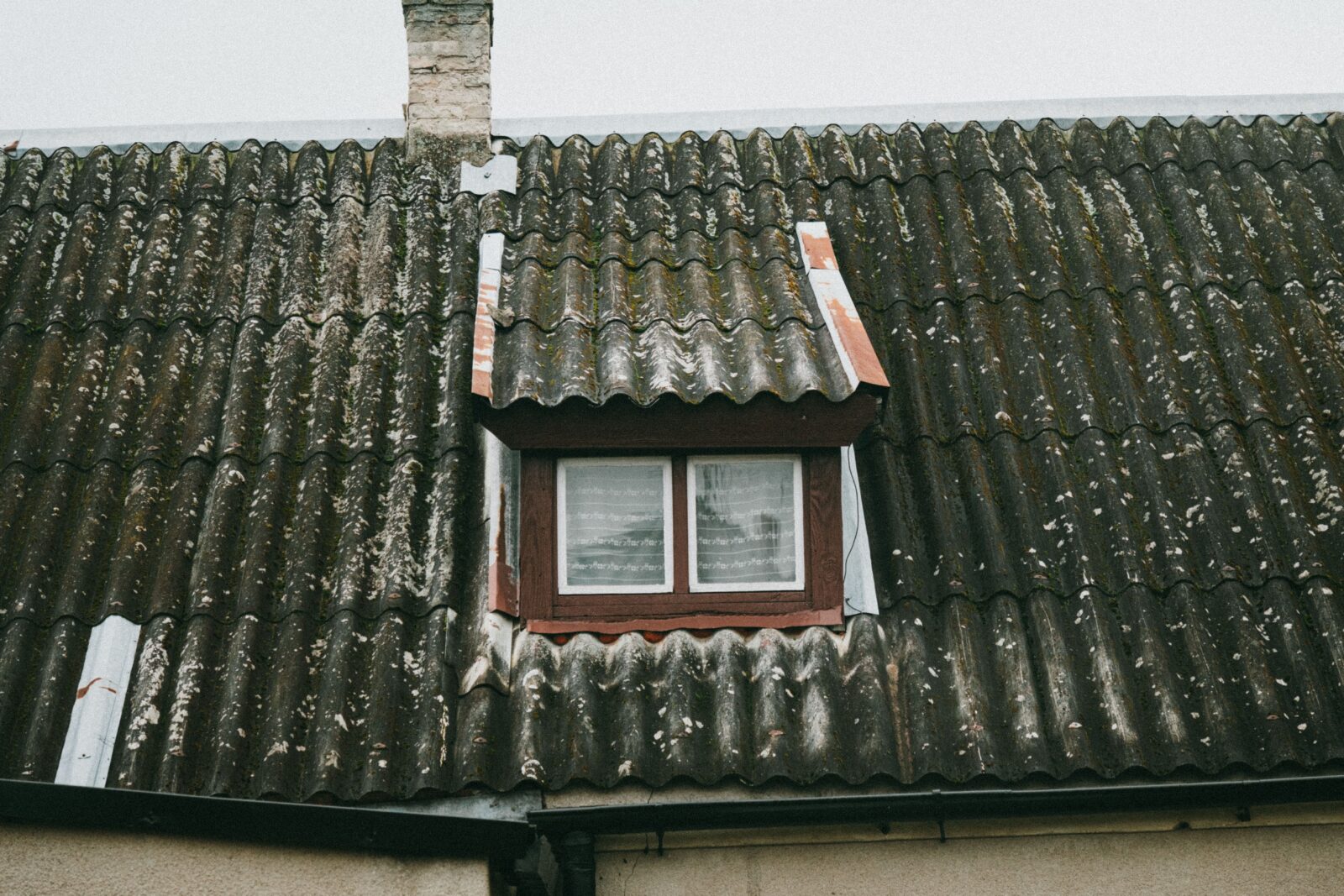
Asbestos was once valued for its heat resistance, strength, and insulating qualities. It was mixed into many construction products, often without anything on the finished surface indicating that it was present. A home’s age can help establish whether asbestos is plausible, but it cannot identify a material by itself. Anyone researching how to identify asbestos in home materials should treat age as a reason for caution, not as proof.
Why the home’s construction date matters
The date a home was built provides useful historical context. Houses constructed or remodeled during the decades when asbestos products were widely sold are more likely to contain older flooring, insulation, siding, or coatings that deserve review. The construction date may also help determine which layers are original and which were added later.
A property record may list the original construction year, but that information does not always describe every material currently in the home. Additions, repairs, and replacement work may have introduced products from different periods. Even so, the date is a sensible first screening question before maintenance or renovation begins.
Common asbestos use before regulatory restrictions
Asbestos appeared in products intended to resist fire, reduce heat transfer, strengthen cement, or improve durability. It could be incorporated into resilient floor tiles, pipe insulation, roofing products, textured coatings, cement materials, and some joint compounds. Because it was blended with other ingredients, it may not look like a separate mineral in the finished product.
Restrictions changed what manufacturers could sell and how certain materials were made, but the timing and scope of those changes varied by product and jurisdiction. Older products can also remain in place for decades. A home does not become free of asbestos simply because a later owner repainted it or replaced one visible surface.
Why newer renovations can still contain older materials
A recent renovation may cover, rather than remove, an older material. New flooring can sit over original tile, wall panels can conceal older surfaces, and a new ceiling can be installed below an earlier textured coating. Records describing the most recent work may therefore leave out materials that remain underneath.
Renovation debris, stored replacement materials, and partially completed projects can complicate the picture further. If a contractor plans to cut, drill, sand, scrape, or remove a surface, the layers affected by that work should be considered before the project starts. A newer finish is not a guarantee that every underlying layer is newer.
When age alone cannot confirm asbestos
Visual age and construction date can only indicate possibility. Similar-looking products were made with and without asbestos, and the same manufacturer may have changed formulations over time. A material that appears suspicious may prove negative, while an ordinary-looking product may contain asbestos fibers that are not visible.
Confirmation normally requires a properly collected sample and laboratory analysis. Until that process is complete, the safest approach is to avoid disturbing the material and to tell workers why it is being treated cautiously. Broader background on asbestos in older homes can help a homeowner frame the initial questions without replacing a professional assessment.
Know where asbestos materials are commonly found
Asbestos-containing materials can occur in more places than a homeowner expects. Some are obvious, such as old pipe wrapping, while others are hidden beneath newer finishes or inside a building system. Location helps an inspector decide what to examine, but it does not establish whether a particular material contains asbestos.
A room-by-room walk-through should focus on materials that may be cut, scraped, removed, or exposed during planned work. The following areas deserve attention, especially in older homes or spaces with incomplete renovation histories.
Flooring, adhesives, and underlayment
Older resilient floor tiles, sheet flooring, backing, and some adhesives may contain asbestos. The material can be concealed beneath carpet, laminate, newer vinyl, or a leveling layer. Dark adhesive beneath a removed floor is not enough to identify its contents, and scraping it away can create unnecessary disturbance.
Homeowners should avoid prying up suspect tiles or sanding adhesive to prepare for a new floor. Cracked or loose flooring should be left in place until a qualified professional determines whether testing is needed. The condition and planned work matter as much as the visible pattern.
Roofing, siding, insulation, and exterior materials
Asbestos was used historically in some cement siding, roofing products, shingles, flashing-related materials, and insulation. Exterior products may look weathered without releasing significant dust, but drilling, cutting, breaking, or pressure-washing them can change the risk. Attic insulation and insulation around penetrations or ducts also warrant care.
Some loose-fill insulation products have been associated with asbestos contamination, but appearance alone cannot settle that question. An inspector can evaluate the material in context and determine whether sampling or another response is appropriate. Exterior work should be planned with the same caution as interior remodeling.
Ceilings, walls, joint compound, and textured coatings
Textured ceiling finishes, ceiling tiles, wallboard compounds, and patching materials may be encountered in older construction. A popcorn-like texture is a familiar warning sign, but smooth surfaces can also contain asbestos in a compound or backing layer. Paint over a surface does not necessarily change what is beneath it.
Scraping texture, drilling for lights, cutting wall openings, or sanding repairs can disturb a suspect coating. If a planned project affects a ceiling or wall, the work area should be assessed before tools are used. A small repair can involve several layers rather than just the surface visible from the room.
Heating systems, pipes, ducts, and electrical components
Heat-resistant materials were used around boilers, furnaces, pipes, ducts, and some older electrical components. Pipe insulation may appear wrapped, molded, or covered with a protective jacket. Duct connections, furnace components, and insulation near heat sources can be difficult to inspect without moving or opening them.
The safest visual review stays at a distance and avoids touching loose coverings. Heating equipment should not be dismantled merely to investigate a suspicion. A professional can determine which components need attention and how an inspection can be performed without spreading debris.
Other overlooked household materials
Asbestos may also occur in older fireproofing, caulks, mastics, roofing felts, door components, and insulation boards. It can be present in utility areas, garages, basements, and outbuildings rather than in the finished living space. Materials installed during different renovations may have different histories within the same property.
A useful inventory records the location, surface condition, and planned activity without collecting pieces or disturbing dust. Photographs taken from a safe distance can help an inspector understand the setting. A homeowner seeking a visual orientation can also review common asbestos locations, while treating every image-based comparison as preliminary.
Learn how to identify asbestos in home materials
The central difficulty is that asbestos is usually not identifiable from an ordinary visual inspection. Fibers are often mixed into a binding material, and age can alter color, texture, and surface condition. A careful homeowner can recognize situations that deserve professional attention, but should not attempt to make a final determination from appearance.
Identification is therefore a process of narrowing uncertainty: gather the home’s history, note where suspect materials occur, evaluate whether they are damaged, and arrange appropriate testing before disturbance. That approach is more reliable than trying to match a sample to a photograph.
Visual clues that may raise suspicion
Fibrous, layered, chalky, or crumbly appearances can raise a question, particularly in insulation and pipe coverings. Repeated patterns in old tiles, textured coatings, or cement sheets may also prompt an inspection. These clues are useful because they help locate materials that should not be disturbed casually.
They remain clues rather than evidence. Dust, deterioration, age, and staining can make unrelated products look similar. A homeowner should document what is visible and where it is located, then leave the material alone while seeking qualified advice.
Product labels, manufacturer markings, and installation patterns
Labels, date codes, packaging, and manufacturer markings can provide valuable context if they are already visible. Renovation invoices may identify a product line or installation date, and an inspector may compare that information with historical product records. Installation patterns can also show whether a material is original or part of a later repair.
The material itself should not be pulled apart to search for a stamp. Markings may be incomplete, copied across products, or unrelated to the formulation used in a particular batch. Records support an assessment, but laboratory results are generally needed when certainty is required before work.
Signs that are not reliable for confirmation
Color, smell, age, texture, and a product’s resemblance to an online photograph cannot reliably confirm asbestos. A material that does not look fibrous may still contain fibers bound inside it. Conversely, a fluffy or damaged material may be another type of insulation entirely.
Home test kits and informal advice can also create false confidence if the sample is not representative or the collection process is unsafe. The question is not simply whether a visible fragment looks familiar. It is whether the material can be identified accurately without exposing occupants or workers.
Why intact materials may pose less immediate risk
Asbestos presents a greater concern when fibers can become airborne and be inhaled. An intact, firmly bound material that is not being disturbed may release less dust than one that is damaged, cut, sanded, or crumbling. That does not make it safe to handle or a reason to ignore it.
Condition can change through water damage, impact, vibration, aging, or renovation. A professional assessment can distinguish a material that can remain in place under a management plan from one requiring repair or abatement. Avoiding disturbance protects options while the facts are being established.
Assess the condition and potential exposure risk
The presence of asbestos and the immediate exposure risk are related but distinct questions. A material may contain asbestos yet remain relatively stable, while a smaller damaged area may require prompt controls. Location, accessibility, surface condition, and the activity planned nearby all influence the assessment.
Homeowners should not try to improve a suspect area by sweeping, vacuuming with ordinary equipment, scraping, or applying a coating without advice. The first response is to stop the activity that could create dust and limit access until the situation is evaluated.
Friable and nonfriable asbestos materials
Friable material can be crumbled or reduced to powder by hand when dry, while nonfriable material is more firmly bound in a matrix. This distinction helps professionals consider how readily fibers might be released. A nonfriable product can still become hazardous if it is cut, broken, sanded, or badly weathered.
Classification is not something a homeowner should test by touch. Pressing, flexing, or scraping a material to see how it reacts may cause the very damage that creates concern. The safer observation is from a distance, noting visible cracks, tears, debris, or water damage.
Damage caused by remodeling, moisture, or aging
Remodeling can expose edges and hidden layers that were previously protected. Leaks may weaken insulation or ceiling materials, and repeated impact can fracture tiles or cement products. Aging alone does not automatically mean that fibers are airborne, but deterioration deserves attention when it affects the material’s binding or protective covering.
If damage is present, occupants should avoid sweeping nearby debris and keep people away from the area. Doors, ventilation, and access routes may need to be managed according to professional advice. A qualified inspector can determine whether the damage is superficial or requires controlled response.
Activities that can release asbestos fibers
Dust-producing work is the main practical concern during home maintenance. Activities that may disturb suspect materials include drilling, sanding, grinding, cutting, scraping, demolition, and removing glued or fastened layers. Even a small task can affect a larger area if debris travels through air or on clothing.
Before work begins, the project should be reviewed for every material that tools may contact. A compact risk screen can include:
- The surface or component that will be disturbed.
- The tools and methods planned for the work.
- The condition and accessibility of the material.
- The people, rooms, and ventilation paths nearby.
This review does not replace sampling or a work plan, but it helps prevent an avoidable start. If the answers are uncertain, the project should pause until a qualified professional explains the appropriate controls.
How to limit disturbance while investigating
Until the material is assessed, people should avoid touching it, moving nearby objects against it, or opening an enclosure to inspect hidden layers. Children, pets, and unprotected workers should be kept away from damaged areas. Ordinary household cleaning should not be used to address suspected asbestos dust.
The homeowner can record the location, photograph it without close contact, and note any recent work or damage. Those details give an inspector a useful starting point while preserving the material’s existing condition.
Check home records before arranging testing
Records can sometimes answer basic questions before anyone needs to enter a wall, lift a floor, or collect a sample. They may reveal when an addition was built, which surfaces were replaced, and who performed earlier work. Even incomplete records are useful when combined with a careful visual inventory.
They should be treated as supporting evidence rather than a substitute for testing. A document may describe a finish but not the adhesive beneath it, or identify a renovation without listing every product installed during the project.
Reviewing renovation and construction documents
Building permits, inspection reports, contractor invoices, product packaging, and renovation photographs may establish dates and materials. Records for flooring, roofing, heating equipment, and ceiling work can be especially helpful because those systems are often replaced in stages. A floor plan may also show where original materials remain.
The homeowner should preserve the documents and note which room or component each one relates to. A broad statement such as “bathroom remodeled” does not establish that every layer was removed. Details about removal, replacement, or encapsulation are more informative.
Asking previous owners, contractors, or building officials
Previous owners may remember repairs that were not fully documented. Contractors can sometimes explain what they installed or encountered, while local building officials may hold permit records for additions and major alterations. These conversations are most useful when questions are specific and supported by photographs or dates.
A recollection that a material was “safe” or “modern” should not be treated as a laboratory finding. The value lies in identifying work areas, hidden layers, and possible installation periods. Those facts can help a professional choose an efficient inspection strategy.
Comparing materials with historical product information
Historical catalogs and manufacturer information may show whether a product type was sold during the relevant period. They can help narrow the possibilities when a label, date code, or installation pattern is available. They are less useful when the product is unidentified or has been altered by years of painting and repair.
A comparison should never involve removing a piece simply to match it with a catalog image. The goal is to organize existing evidence, not to create a new exposure. If uncertainty remains, the material should be managed as suspect until a qualified assessment says otherwise.
Knowing when records are insufficient
Missing permits, incomplete invoices, and conflicting accounts are common in older properties. A remodeled surface may have several layers, and the available records may describe only the most recent one. When the planned work could disturb any of those layers, uncertainty itself is a reason to arrange professional advice.
The homeowner does not need to solve the history alone. A clear record of what is known, what is missing, and what work is planned gives an inspector a practical basis for deciding whether sampling is necessary.
Arrange professional asbestos inspection and testing
Professional inspection is appropriate when a suspect material is damaged, inaccessible, or likely to be disturbed by planned work. The inspector can consider the material’s location, condition, and relationship to the project instead of relying on appearance alone. Testing is most useful when its results will guide a specific repair, renovation, or management decision.
A homeowner should ask about qualifications, applicable state or local requirements, sampling procedures, and laboratory arrangements before work begins. An official home asbestos resource can provide additional general context, but local professionals remain responsible for applying the rules to the property.
When to hire an accredited asbestos inspector
An inspector should be engaged before renovation, demolition, or repairs that may affect older building materials. Professional help is also sensible when a material is visibly damaged, when records conflict, or when occupants are unsure whether a planned task will disturb hidden layers. The inspector’s role is to assess and document, not to encourage exploratory demolition.
The homeowner should describe the planned work in detail, including drilling, flooring replacement, wall openings, heating repairs, or exterior changes. That information helps determine which materials need review. Credentials and accreditation should be checked against the requirements that apply in the property’s jurisdiction.
How samples should be collected safely
Sampling should be performed by a trained professional using methods designed to limit fiber release and cross-contamination. The inspector may take a small representative portion, control the area, use appropriate protective equipment, and seal the sample and surrounding material. The exact procedure depends on the product and its condition.
Homeowners should not collect a piece in a bag, sweep fragments into a container, or send an unprotected sample through the mail. A sample from the wrong layer may produce a result that does not represent the material a project will disturb. Professional sampling reduces both uncertainty and unnecessary contact.
What laboratory analysis can confirm
Laboratory analysis can determine whether asbestos is present in the submitted material and may identify the type or proportion according to the method used. The result applies to the sample collected, so representative sampling matters. A negative result for one product does not automatically clear a similar-looking product elsewhere in the home.
The written report should be matched to the inspection location and the planned scope of work. If several layers or rooms are involved, the homeowner should ask whether the sampling plan addresses each relevant material. Results then become part of a practical decision rather than an isolated label.
Why do-it-yourself testing can create additional hazards
Do-it-yourself sampling requires disturbing the material, which can release fibers and spread contamination. It also creates the possibility of selecting an unrepresentative piece, using inadequate protection, or leaving a damaged area unsealed. A low-cost test is not worthwhile if the collection process increases exposure or produces an unreliable answer.
When a homeowner has already disturbed a suspect material, the safest response is to stop work, keep people away, and seek professional instructions. The area should not be cleaned with ordinary methods before that advice is received.
Decide what to do after asbestos is suspected or confirmed
A positive result does not always mean that every material must be removed immediately. The appropriate response depends on condition, location, accessibility, future work, and applicable regulations. A professional can help compare leaving the material in place with controlled repair, enclosure, encapsulation, or removal.
The key decision is to prevent disturbance and manage the material over time. Any response should be documented so future owners, contractors, and maintenance workers know what was found and how it was addressed.
When to leave the material undisturbed
If a material is intact, stable, and unlikely to be disturbed, leaving it in place may be considered after a professional assessment. That choice usually requires monitoring, clear records, and instructions for anyone who may work nearby. It is not the same as declaring the material harmless.
The management plan should identify its location and condition and explain what activities are prohibited. Changes such as leaks, impact, crumbling, or a planned renovation should trigger a new review.
Encapsulation, enclosure, and removal options
Encapsulation involves applying a suitable product to bind or seal a material, while enclosure places a durable barrier between the material and occupied or work areas. Removal takes the material out under controlled conditions. Each option has different requirements and may not suit every product or location.
The choice should account for future access, moisture, building movement, maintenance, and the likelihood that another project will expose the material. Covering a surface without addressing edges, penetrations, or future repairs may create a false sense of completion. A written recommendation is preferable to an improvised fix.
Choosing qualified asbestos abatement professionals
Abatement work should be performed by contractors who are properly trained, licensed, or otherwise qualified under the rules governing the property. The homeowner can request proof of credentials, a written scope, containment and cleanup procedures, waste handling details, and references for comparable work. The lowest quote may not describe the same level of control.
The contractor should distinguish clearly between inspection, project design, abatement, and clearance activities where local rules require separate roles. Written communication helps prevent a crew from expanding the work informally after demolition begins.
Preparing for renovation, repair, or demolition
The project should not begin until suspect or confirmed materials within the work area have been assessed and the response documented. Contractors need to know which surfaces and components are affected, even if those materials will eventually be covered. Scheduling, occupant relocation, access control, and protection of unaffected rooms should be planned in advance.
A renovation plan should also account for hidden layers and debris pathways. Stopping halfway through a demolition job can leave the home exposed and the project more expensive. Early assessment gives the homeowner time to revise the scope safely.
Understanding local disposal and notification requirements
Asbestos waste may be subject to specific packaging, labeling, transport, disposal, and notification requirements. These rules can vary by state, county, city, project size, and building type. A contractor or local environmental authority can explain which notices and disposal facilities apply.
Household trash, recycling bins, and ordinary construction dumpsters should not be assumed to accept asbestos materials. Before removal begins, the homeowner should obtain written information about who will handle the waste and how completion will be documented. Careful planning protects occupants, workers, neighbors, and future property users.