

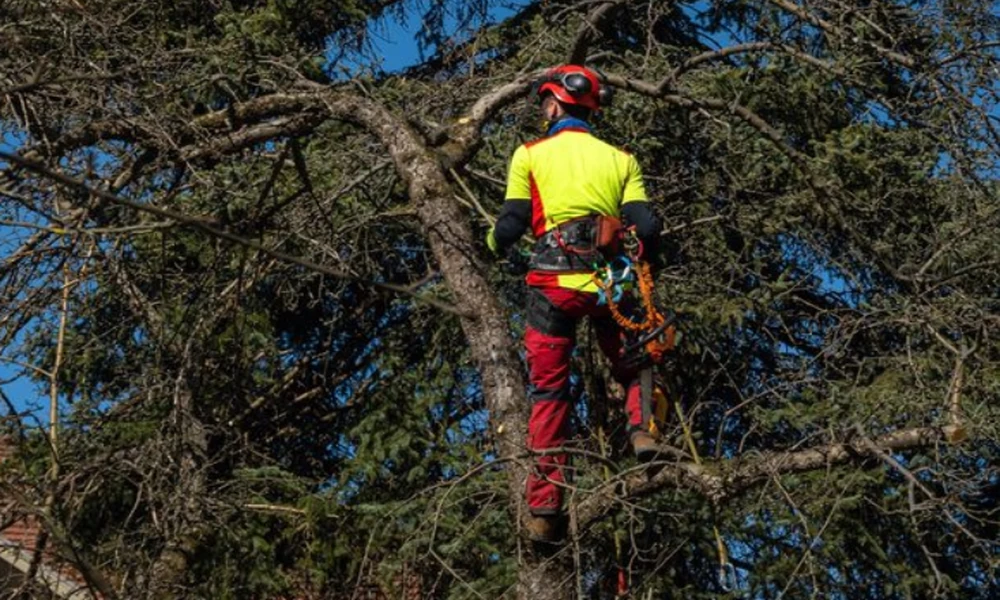
Choosing someone to care for your trees involves more than comparing prices. You are trusting a crew to work near your home, vehicles, landscaping, and sometimes overhead utilities.
A good conversation before hiring can help you understand what your tree needs, how the work will be done, and what the price includes. It can also help you avoid paying for removal when pruning or another approach may be suitable.
If you are looking for a Pinellas County arborist, start with these nine questions.
Key Takeaways
- Verify the credentials of the person assessing your trees.
- Ask for current insurance information and a written description of the work.
- Compare estimates based on the same services.
- Clarify deposits, scheduling, property protection, and cleanup before work starts.
- Ask why a treatment or removal is recommended and whether alternatives exist.
1. Are You an ISA Certified Arborist, and Who Will Assess My Trees?
Ask for the name and credential number of the person evaluating your trees.
An ISA Certified Arborist has met the organization’s eligibility requirements and passed an examination covering tree care knowledge. Certification belongs to an individual, not automatically to everyone working for a company.
Find out whether that person will inspect your property, prepare the recommendations, or supervise the work. Those are different roles.
You can verify a claimed credential through the International Society of Arboriculture’s resources. Certification is a useful qualification, but it does not guarantee the outcome of a particular job. ISA guidance on arborist qualifications
For a concern about tree stability, also ask about the assessor’s experience and qualifications in tree risk assessment.
2. What Insurance and Applicable Business Credentials Do You Carry?
Request current proof of general liability insurance and applicable workers’ compensation coverage. Confirm the information with the insurance provider rather than relying only on a statement in an advertisement.
Ask whether the coverage applies to the proposed tree work and whether subcontractors will be involved.
Business credentials, professional certification, and insurance serve different purposes. One does not replace the others. The ISA recommends checking insurance and applicable local licensing requirements before hiring. ISA hiring guidance
Avoid treating “fully insured” as a promise that every possible loss will be paid. Coverage depends on the policy, exclusions, and circumstances.
3. When Can You Start, and How Long Should the Work Take?
Ask for both an expected start date and an estimated time on your property.
Those are not always the same thing. A job may take one day to complete but require advance scheduling for equipment, utility coordination, or approvals.
Useful follow-up questions include:
- What could delay the work?
- Will you contact me if the schedule changes?
- Does someone need to be home?
- Will the driveway or an entrance be blocked?
- Are stump grinding and cleanup scheduled for the same visit?
An estimate should account for the tree’s size, condition, and access. Weather and unexpected site conditions can still change the plan.
Clear communication matters more than a promise to finish as quickly as possible.
4. Can You Provide References for Similar Projects?
Ask about work that resembles your project.
Removing a large tree beside a pool enclosure is different from pruning a small tree in an open yard. Relevant references can tell you more than a general claim that the company has many satisfied customers.
When speaking with a previous customer, ask whether the crew arrived as expected, explained changes, respected the property, and completed the agreed cleanup.
Online reviews can provide additional context. Look for patterns across several reviews and pay attention to how the company handles concerns. A star rating alone does not explain the full customer experience.
5. Can You Provide a Detailed Written Estimate?
A useful estimate should explain exactly what you are buying.
For pruning, it should identify the trees and the intended work. For removal, it should clarify whether hauling, stump grinding, and cleanup are included.
Ask the contractor to document:
- The trees covered by the estimate.
- The recommended work and its purpose.
- Equipment or access requirements that affect the price.
- Included services and exclusions.
- How additional work will be approved and charged.
For nonurgent projects, comparing several estimates can help. There is no need to collect a fixed number, but each company should be quoting a similar scope.
A lower price may leave out services another estimate includes. Compare the details before comparing the totals.
6. Do You Require a Deposit, and When Is Payment Due?
Ask about payment terms before agreeing to the job.
A deposit does not automatically mean a company is unqualified. However, the amount, purpose, refund terms, and remaining payment schedule should be clear and written into the agreement.
Be cautious about pressure to pay the full price before work begins, especially when the scope or start date is unclear.
Discuss what happens if weather delays the project, you cancel, or the crew discovers a condition that changes the work.
Keep copies of the agreement, invoices, and payment receipts. Any change in price should be explained and approved rather than appearing as a surprise on the final bill.
7. What Experience Do You Have With This Type of Tree and Property?
Years in business can be useful background, but relevant experience deserves a closer look.
Ask about the crew’s experience with your tree species, the proposed work, and any access limitations. A narrow side yard, steep ground, nearby pool, or damaged trunk may affect the approach.
You can also ask who will lead the crew and who will answer questions on the day of service.
A newer company may employ experienced workers, while an established business may send a crew unfamiliar with your particular situation. Focus on the people and methods assigned to your project.
8. Why Do You Recommend This Work, and How Will You Protect the Property?
The arborist should explain the problem in language you understand.
If removal is recommended, ask what makes it necessary and whether pruning, monitoring, or another option could reasonably address the concern. If treatment is proposed, ask what diagnosis supports it and what results are realistic.
Then discuss the work plan. Where will equipment travel? How will nearby structures and landscaping be protected? Are there utility concerns that require coordination?
Permit responsibilities should also be clear. Requirements depend on the property’s jurisdiction and proposed work. Pinellas County directs owners to confirm their location and contact the appropriate city when its permitting process does not apply. Pinellas County tree permit guidance
Be cautious about promises of zero risk or guaranteed storm protection. A thoughtful explanation of precautions is more useful.
9. What Cleanup and Restoration Are Included?
“Cleanup included” can mean different things to different companies.
Ask whether the crew will remove branches, logs, sawdust, and wood chips. If you want to keep firewood or mulch, discuss that before the work begins.
Stump grinding needs its own details. Confirm whether grinding debris will remain, whether the area will be backfilled, and whether soil or sod installation is included.
Also ask how any equipment ruts or disturbed landscaping will be handled. General debris cleanup and landscape restoration are separate tasks.
Before final payment, review the completed work against the written agreement and raise any questions.
Choose a Pinellas County Arborist Who Explains Your Options
The right tree care provider should help you understand the recommendation, the price, and the plan. You should not have to guess what will happen once the crew arrives.
Keep the written scope, insurance information, and payment terms together. A few clear answers before the job can prevent confusion later.
At Arbor Wise Tree Service, we welcome questions about your tree care needs in Pinellas County. Whether you are considering pruning, tree removal, or stump grinding, start with a conversation about your property and goals.
Contact Arbor Wise Tree Service to discuss your project and request an estimate.
This post was written by a professional arborist at Tree Service Company Clearwater FL. Robert Miller is the owner of Arbor Wise Professional Tree Care, a locally owned and operated tree service company that offers superb lawn care by the most experienced Arborists. Arborwise Tree Services is a tree removal company that offers stump removal, tree pruning, stump grinding, fertilization, and tree restoration. We have an extraordinary lawn care industry notoriety covering the Pinellas county area.